
The myth in black and white
Munich, October 16, 2026 - In mythology—as well as in Baroque opera—a dispute among the gods often determines the fates of mortals below. Hugo von Hofmannsthal reversed this dynamic: his libretto begins with a conflict among humans, which in turn dictates the destiny of fictional characters in a realm of pure fantasy. A wealthy patron has commissioned the premiere of an opera, "Ariadne auf Naxos," by a young composer, to be followed by an *opera buffa* centered on Zerbinetta and her unfaithful lovers. However, the master of the house decides he wishes to see and hear both works simultaneously. A compromise is reached: Ariadne will perform first, and the *buffa* troupe will simply have to fit themselves into the proceedings. Thus, we first encounter Ariadne, lamenting her fate—abandoned by her lover, Theseus, on a deserted island. Zerbinetta arrives, delivers a discourse on the merits—or lack thereof—of monogamy, and proceeds to select a new partner from her retinue of admirers. As for Ariadne, she finds a new lover: the god Bacchus. And they lived happily ever after…
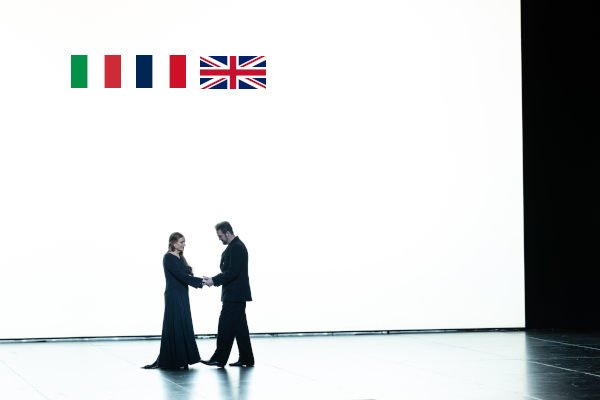
Richard Strauss’s score is wonderfully varied, encompassing everything from light, folk-inspired melodies to highly dramatic arias. Robert Carsen’s 2008 production translates this brilliantly into imagery and movement. There is a great deal of dancing; every action on stage serves as a physical extension of the music, with the dancers of the State Ballet providing a meaningful enhancement to the unfolding narrative. Peter Pabst’s set design and Falk Bauer’s costumes are as simple as they are effective: we begin in a dance studio, where, even as the audience is still taking their seats, a group of dancers is rehearsing a piece. The conductor appears unobtrusively—without any applause—and a sequence that is half-spoken, half-sung sets the scene, leading into the action proper. The performance is full of variety—by turns comic and dramatic—sustained by a wonderful ensemble and the delicate, light-footed conducting of Robin Ticciati. The two demanding female lead roles are cast to perfection: Anja Kampe as the Primadonna/Ariadne and Sabine Devieilhe as Zerbinetta. One brings a Wagnerian, dramatic intensity, the other a witty, sparkling energy; together, they embody the very essence of the work’s multifaceted charm. The rest of the cast is equally outstanding, including Irene Roberts as the Composer; the cheerful, playful troupe of *commedia dell’arte* characters—Konstantin Krimmel (Harlequin), Joel Williams (Scaramuccio), Paweł Horodydski (Truffaldino), and Lucas van Lierop (Brighella)—and a trio of nymphs consisting of Najade (Sarah Dufresne), Dryade (Emily Sierra), and Echo (Eirin Rognerud). Then there is the magnificent tenor Brian Jagde, who makes only a brief appearance in the prologue, saving his major entrance for the finale. The production team has crafted this finale brilliantly: the single act of the opera itself is staged entirely in black—the set is black, the women wear black dresses, the men wear black suits (or, in the case of Zerbinetta’s entourage, black shorts and little else)—with Zerbinetta’s red shoes serving as the only splash of color. Then, a streak of white light appears behind Ariadne, gradually widening until Ariadne and Bacchus are visible only as silhouettes, singing a poignant love duet. It is truly wonderful and moving to hear how their two voices merge.
Great applause for everyone; we are grateful for an engaging and impressive evening at the opera.